
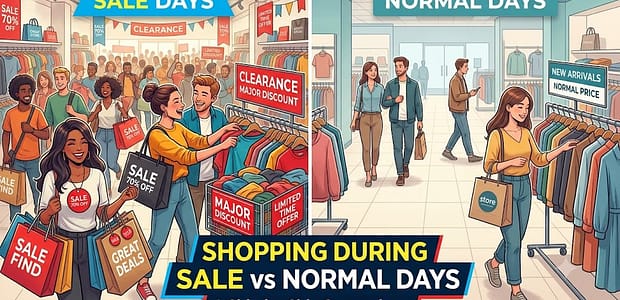

Everyone loves seeing giant banners that say “Up to 80% OFF!” Whether it’s Black Friday, Diwali, 11.11, 12.12, or end-of-season sales, these promotions create excitement and encourage shoppers to buy before the deals disappear.
But here’s the question:
Do sales always offer the lowest prices?
Not necessarily.
Many smart shoppers save money by understanding when to shop—not simply by waiting for a sale. Let’s compare shopping during sale events versus buying on regular days.
Shopping During Sale Events
Sale events are designed to move inventory quickly while attracting millions of shoppers.
Advantages
1. Bigger Discounts
Major shopping festivals often feature significant markdowns, especially on fashion, electronics, beauty products, and home essentials.
2. Stackable Savings
Many online stores allow you to combine:
- Coupon codes
- Store discounts
- Cashback offers
- Bank promotions
- Free shipping vouchers
When stacked together, the total savings can be substantial.
3. Better Bundle Deals
Retailers frequently offer:
- Buy One Get One (BOGO)
- Combo packs
- Gift-with-purchase promotions
These deals can reduce the cost per item.
Disadvantages of Shopping During Sales
High Demand
Popular products may sell out within minutes.
Limited Sizes or Colors
Fashion items often disappear quickly.
Shipping Delays
Large sale events generate heavy order volumes, leading to longer delivery times.
Impulse Buying
Many shoppers purchase items simply because they’re discounted rather than because they need them. Research suggests the anticipation and satisfaction of getting a deal can encourage extra spending.
Shopping on Normal Days
Regular shopping days may not seem exciting, but they have their own advantages.
Advantages
Less Pressure
You have time to:
- Compare prices
- Read reviews
- Watch price trends
- Decide carefully
Better Product Availability
Popular items are usually fully stocked.
Easier Returns and Customer Support
Customer service is often faster outside peak shopping periods.
Surprise Discounts
Retailers frequently offer:
- Flash sales
- Exclusive coupons
- Newsletter discounts
- Loyalty rewards
without waiting for major shopping events.
Disadvantages
Higher Base Prices
Some products remain at full retail price.
Fewer Promotional Offers
You may miss large seasonal discounts on specific categories.
Sale Prices Aren’t Always the Lowest
One common misconception is that every “sale” represents the lowest price.
In reality:
- Some products gradually increase in price before a sale.
- Discounts may be calculated from the manufacturer’s suggested retail price (MSRP) instead of the recent selling price.
- Coupons available before or after a major sale can sometimes produce a lower final checkout price than buying on the official sale day. Community discussions regularly note this pattern, making price tracking worthwhile.
This is why experienced shoppers track prices over time instead of relying only on promotional labels.
When Sales Are Usually Worth Waiting For
Consider waiting if you’re buying:
- Smartphones
- Laptops
- TVs
- Home appliances
- Furniture
- Seasonal clothing
- Holiday gifts
These categories often receive their biggest discounts during annual shopping events or seasonal clearances.
When You Should Buy Immediately
Buying now may be the better option when:
- You genuinely need the item.
- The current price already fits your budget.
- You have a working coupon code.
- Cashback is available.
- Stock is limited.
Waiting for a sale could mean missing out entirely if the item sells out or the price doesn’t actually improve.
Tips to Save Money Any Day of the Year
Whether you’re shopping during a sale or on a regular day, follow these simple strategies:
- Compare prices across multiple retailers.
- Use verified coupon codes.
- Check cashback websites or apps.
- Track historical prices when possible.
- Sign up for retailer newsletters for exclusive discounts.
- Avoid impulse purchases.
- Make a shopping list before browsing.
Sale Days vs Normal Days: Quick Comparison
| Feature | Sale Days | Normal Days |
|---|---|---|
| Discounts | ⭐⭐⭐⭐⭐ | ⭐⭐ |
| Product Availability | ⭐⭐ | ⭐⭐⭐⭐⭐ |
| Shopping Pressure | High | Low |
| Shipping Speed | Slower | Faster |
| Impulse Buying Risk | High | Low |
| Coupon Opportunities | High | Moderate |
| Stock Availability | Limited | Better |
Final Verdict
Shopping during sales can lead to impressive savings—especially when discounts, coupons, cashback, and free shipping are combined. However, the biggest advertised discount isn’t always the best value.
Regular shopping days offer more time to compare prices, better stock availability, and less pressure to buy. The smartest strategy is to monitor prices, use verified coupon codes, and purchase when the final price—not just the advertised discount—is genuinely the best.
In the end, smart shopping isn’t about buying during every sale—it’s about buying at the right price.